OneView
Modernizing Citi’s legacy call center platform to help agents work faster, with less friction
Senior Product Designer
2024–2025
Creative Director
Product Designers
Product Managers
Engineering
Container redesign
Navigation
Tools
Session management
Scalable UI patterns
Overview
Redesigning a core servicing platform without disrupting how agents worked
OneView was Citi’s internal servicing platform for call center agents. As the legacy Sawgrass system was phased out, Citi needed to modernize a tool used in fast, repetitive workflows where speed, accuracy, and focus mattered.
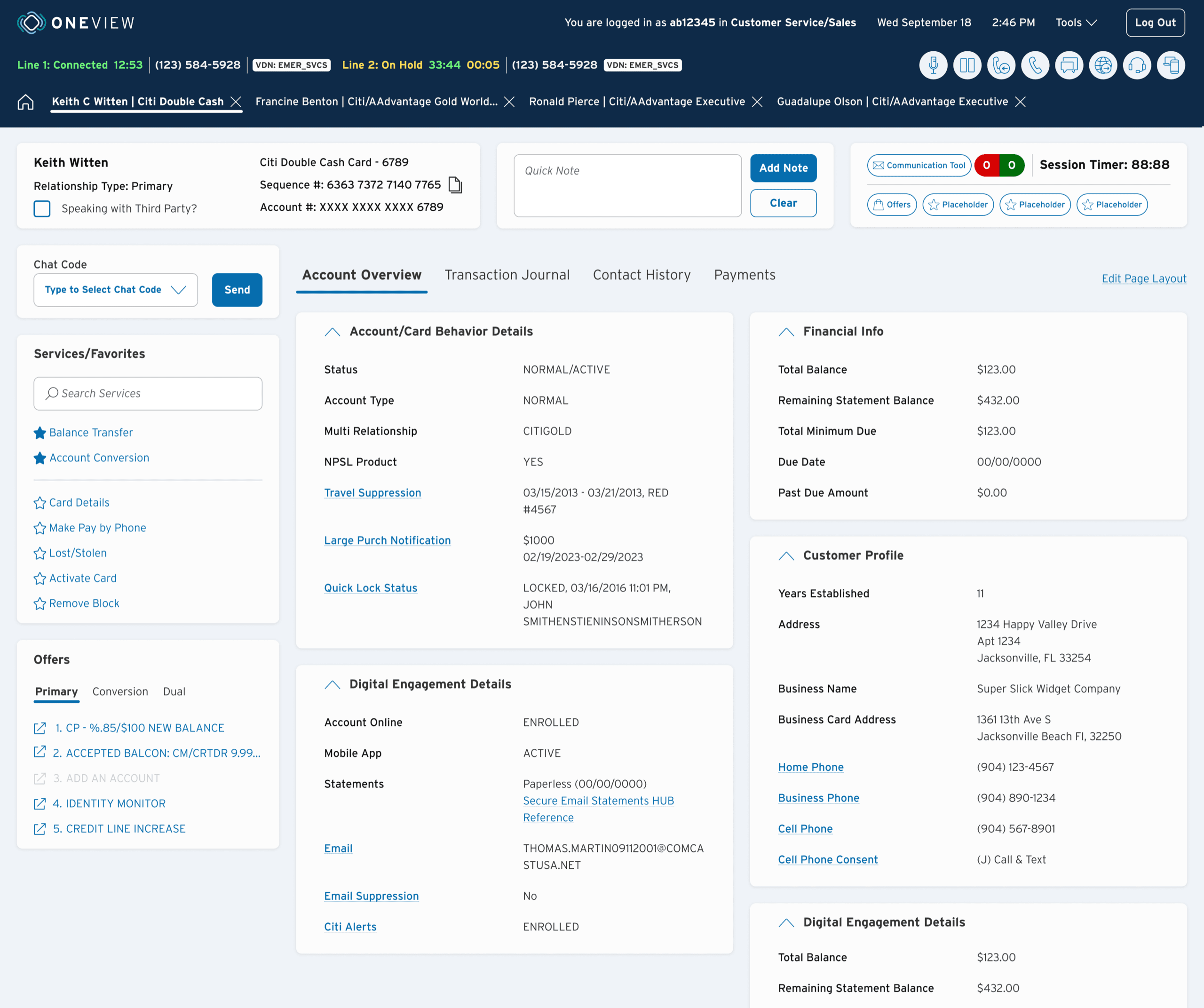
I helped shape the future container and agent homepage through agent research, information architecture, navigation, session management, and scalable UI patterns.
$190M+
Projected five-year cost savings
20K+
Servicing agents supported
5 domains
Patterns designed to scale
The Problem
The platform needed to modernize without slowing agents down
OneView had accumulated crowded navigation, redundant links, disconnected tools, and outdated session patterns.
At the same time, agents had built strong muscle memory around the system.
The challenge was to reduce friction and support Citi’s migration away from Sawgrass without disrupting the habits agents depended on every day.
The Solution
Modernize around how agents actually worked
I audited the legacy experience, partnered with product teams to understand workflow requirements, and gathered direct feedback from agents.
The strategy was simple:
Preserve what helped agents move quickly, simplify what created friction, and build a flexible foundation for future workflows.
Design Decision 01
Audited the legacy experience before redesigning it
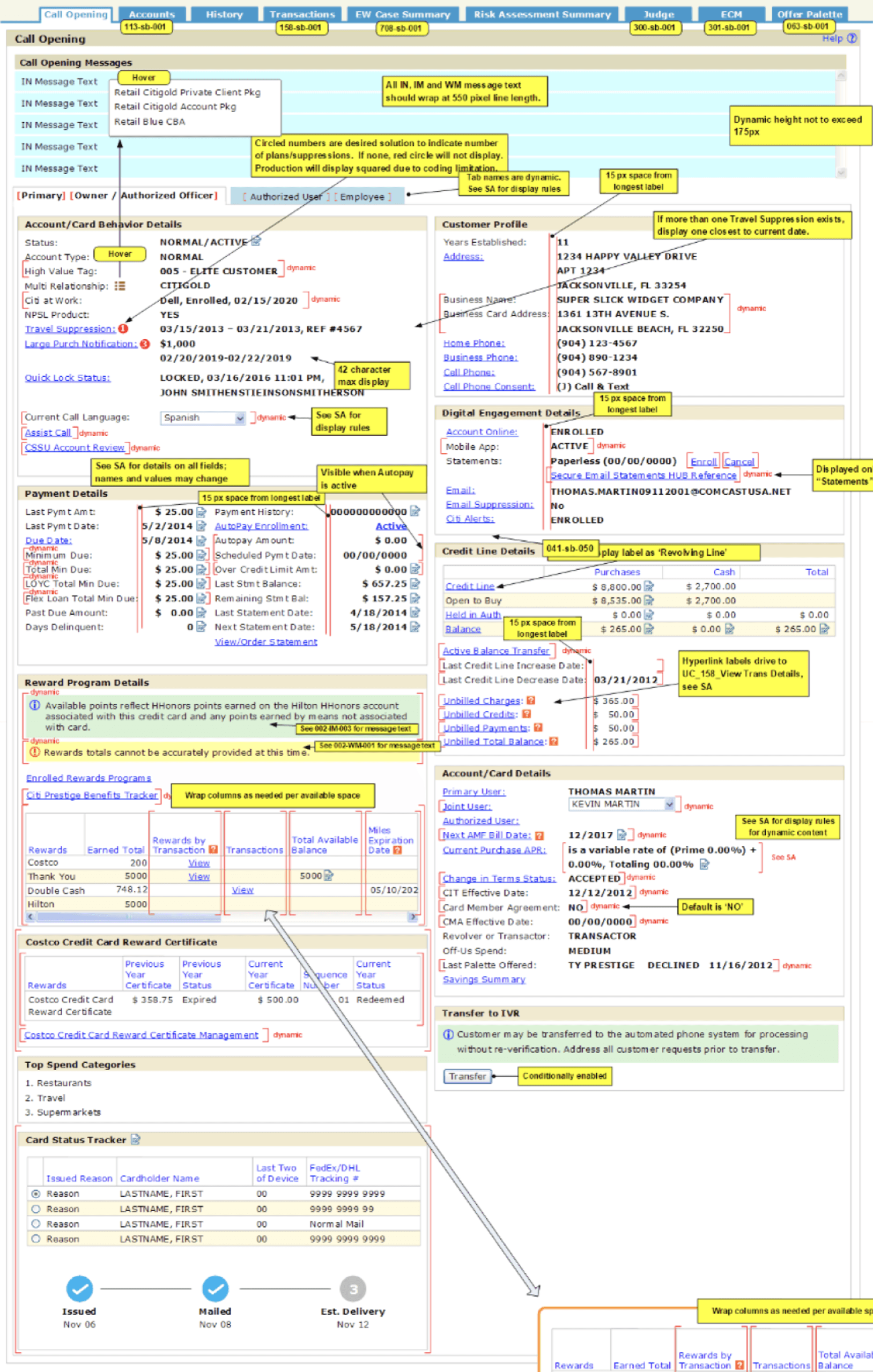
I reviewed the navigation, toolbar, homepage, and session structure with product partners.
This helped identify redundant actions, unclear hierarchy, and patterns that had accumulated over time — while separating real workflow needs from legacy clutter.
Design Decision 02
Validated pain points with agents
I facilitated a focus group to understand what agents used most, what slowed them down, and where they had created workarounds.
The research confirmed that the biggest issues were not only visual. Agents were managing too much information, disconnected tools, and inefficient task switching.
Design Decision 03
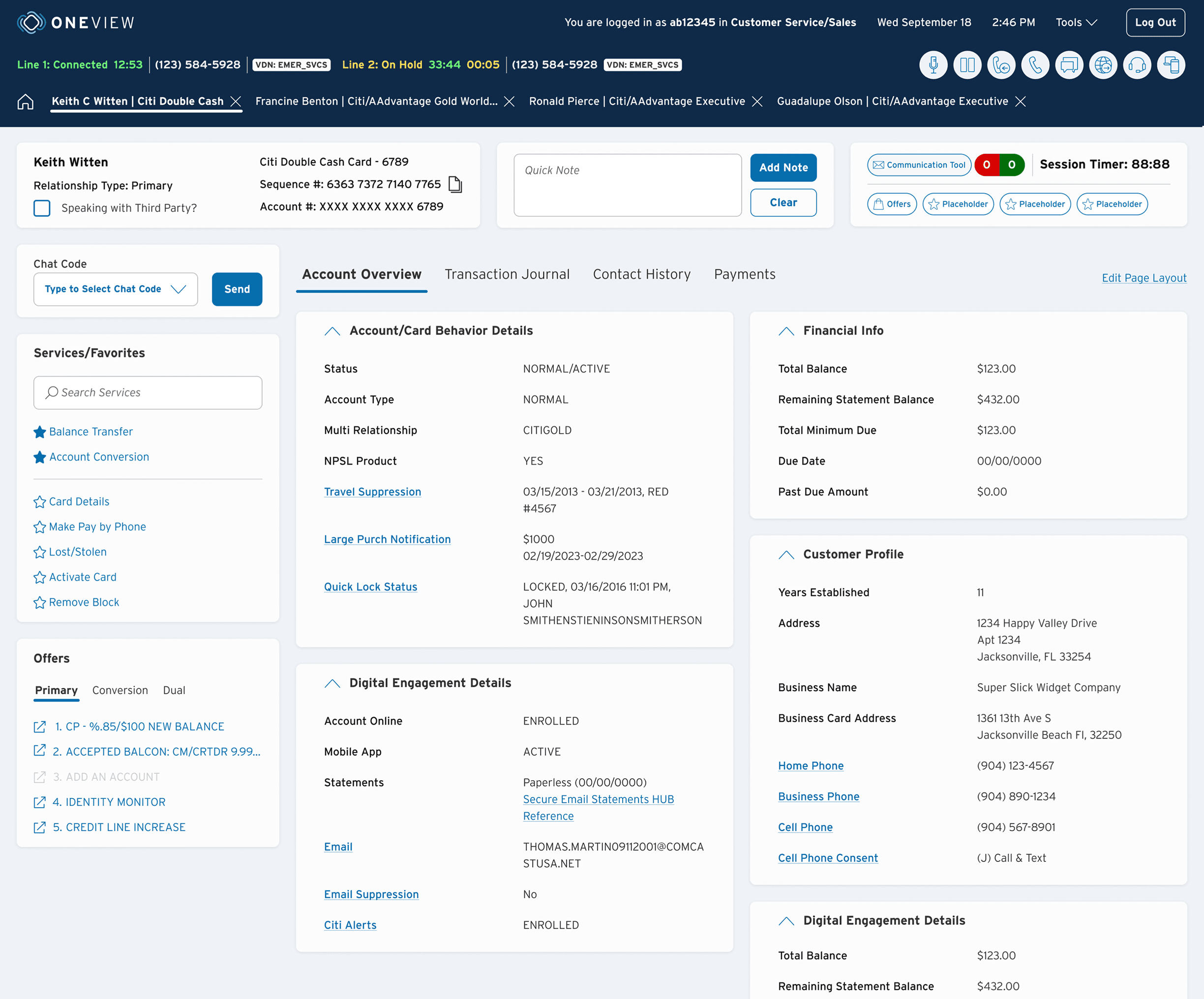
Reworked the homepage around different workflows
I asked agents to rank homepage sections by importance.
Aside from Payment Details, there was no single order that worked for everyone.
That insight moved the design away from a fixed layout and toward a modular homepage that could better support different roles and servicing tasks.
Design Decision 04
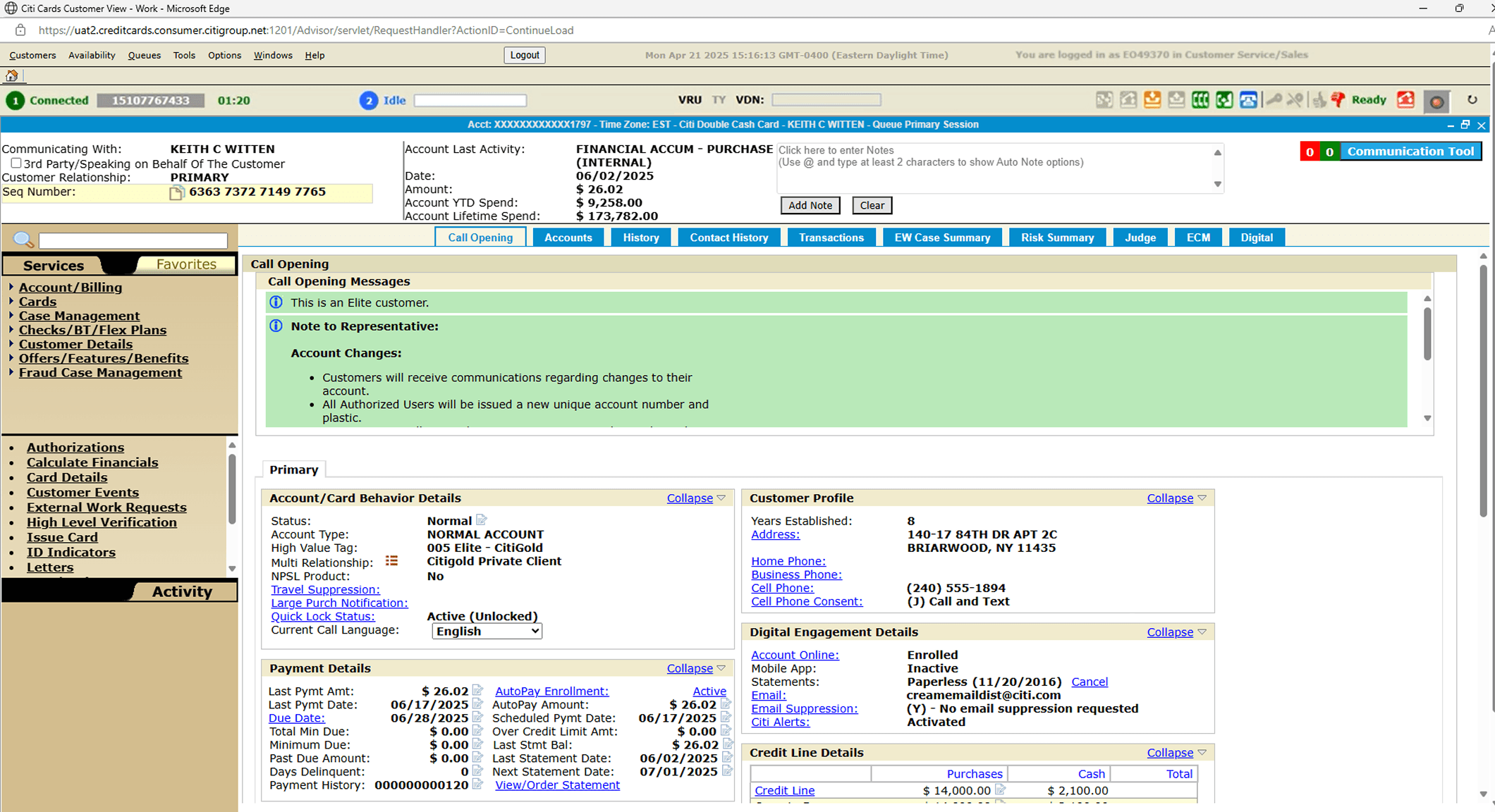
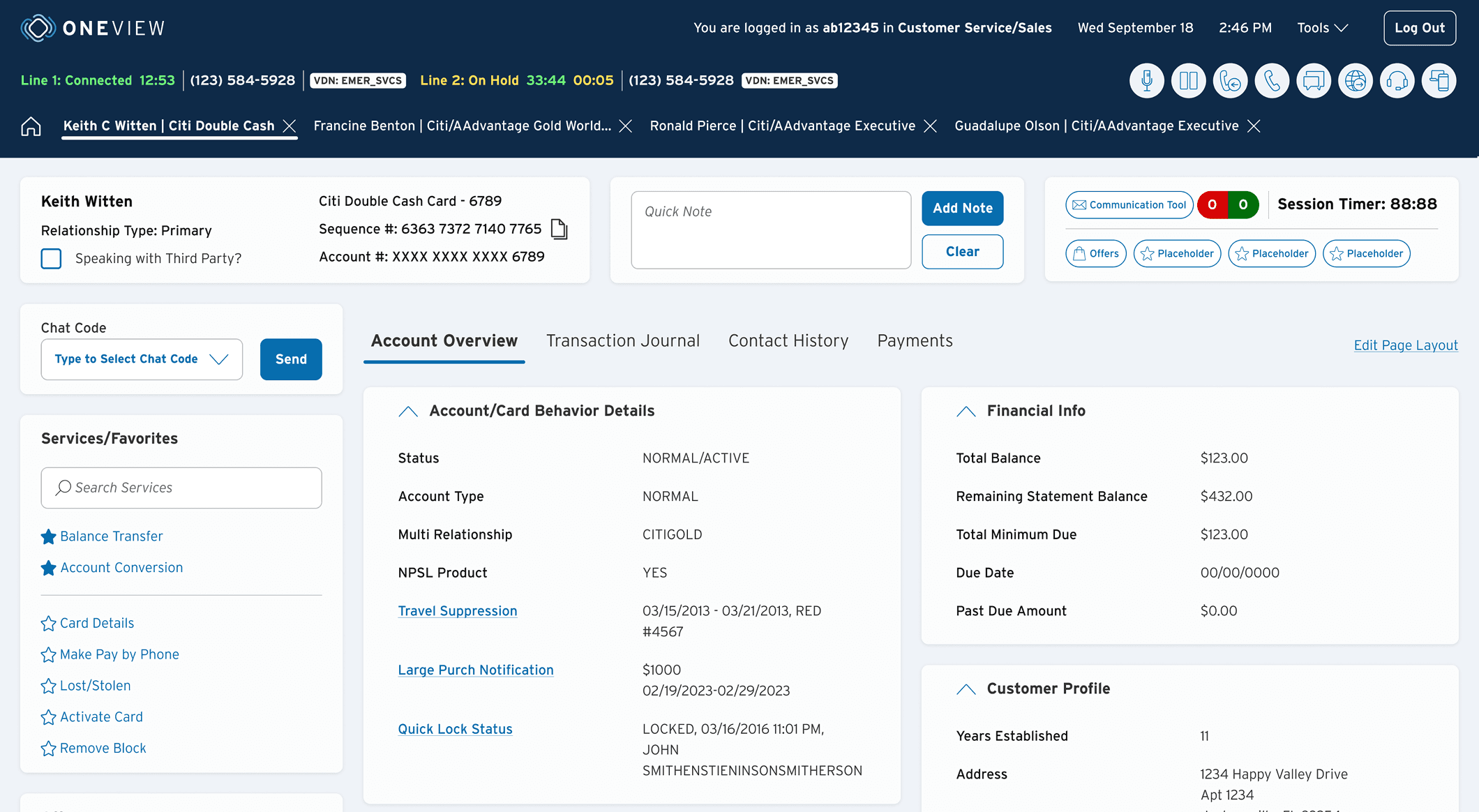
Preserved familiar patterns where they still worked
We avoided changing patterns simply to make the interface feel new.
Softphone controls stayed in the top-right, but their size and visibility improved. Less-used actions moved into a Tools menu to reduce noise without removing functionality.
The result felt cleaner without forcing agents to relearn the platform.
Design Decision 05
Simplified session management
In the legacy experience, each customer session opened in a separate window.
I introduced a tabbed container so agents could manage multiple sessions in one workspace — without losing access to navigation, tools, or customer context.
Impact
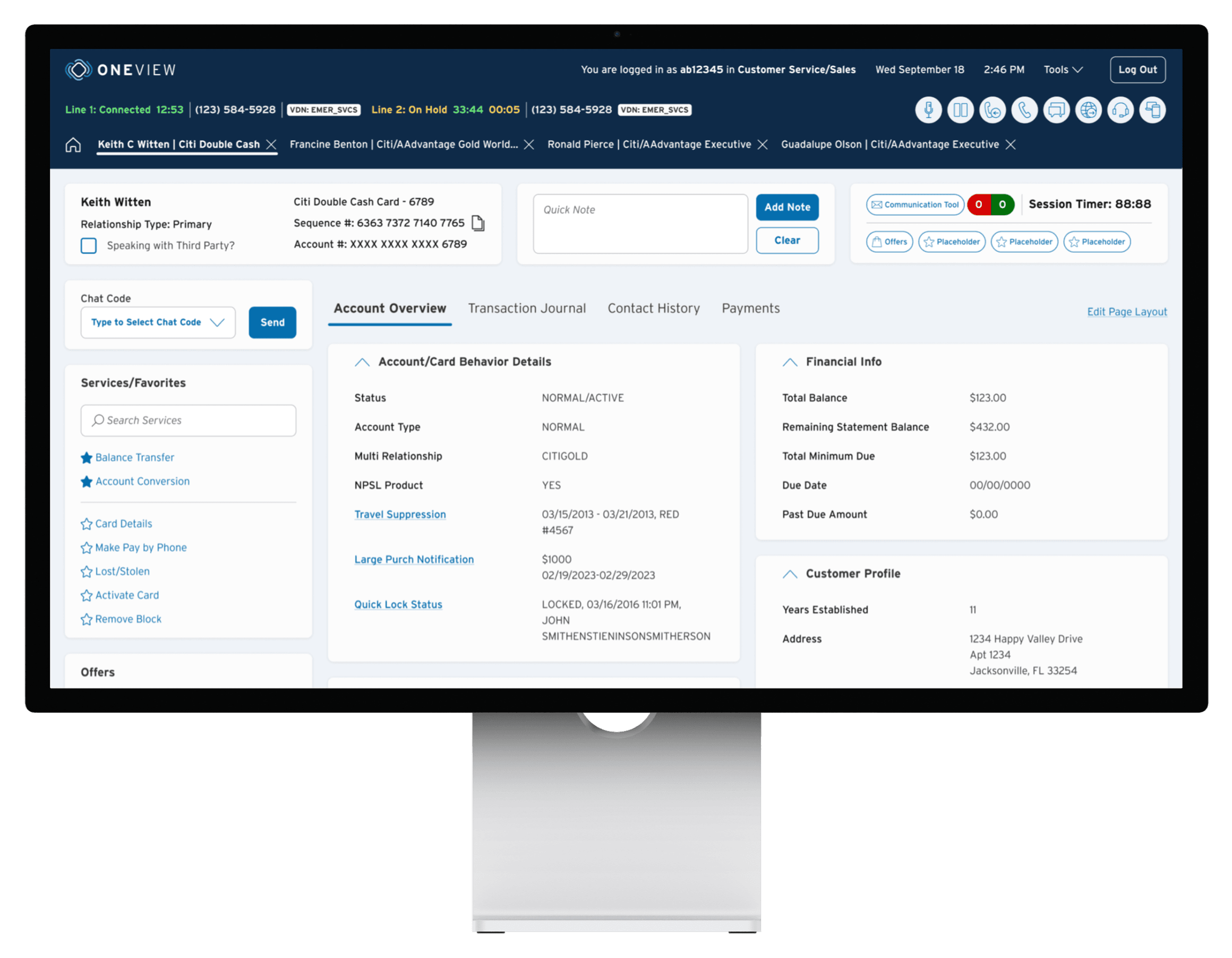
The redesign created a stronger foundation for Citi’s servicing platform
OneView supported Citi’s broader effort to reduce call time, improve operational efficiency, shorten training, and migrate away from legacy infrastructure.
$190M+ projected five-year cost savings
20K+ agents supported
5 domains designed to use shared patterns
The work improved navigation, reduced screen clutter, simplified session management, and created a more flexible foundation for future workflows.
Reflections
Looking back, I would push further toward personalization and measurement
More role-based experiences
Tailor homepage defaults and tools around agent roles and servicing workflows.
Better in-product guidance
Use smarter defaults, suggested next steps, and embedded support for common tasks.
Stronger post-launch measurement
Track task speed, module usage, session switching, and training ramp time.
This project reinforced that good enterprise design is not about flashy reinvention. It is about making complex work easier for the people doing it every day.
Next project
All workATM Transformation
Rebuilding 65K+ ATMs on one scalable design system.
View case study